15. March 2012 20:56

Not Okay

Bob does it again...


Categories:

Tags:

10. November 2011 01:26

Updating the Bechdel Test for video games

If you are not familiar with the Bechdel Test, it is a simple test to apply to films; (i) there must be at least two women in it, (ii) who talk to each other, (iii) about something besides a man.

Many films still fail this test, though it was made popular back in 1985. The test only goes as far to look at the visibility of women in film, and to examine that they are defined by more than their relationship to a man. It doesn’t examine how the women are portrayed and a film that passes the test may in no way be a feminist film. It’s simplicity is both it’s strength and it’s weakness.

I’m interested in how this could be applied to the context of video games. But in order for it to work I think there needs to be some changes. So here is my version:

(i)There must be a female character with whom you can interact, (ii) who doesn’t need rescuing, (iii) and isn’t a prostitute.

Such a test comes with the assumption that there are gendered characters within the game. Some games, such as Flow or Space Invaders, do not have any characters of gender.
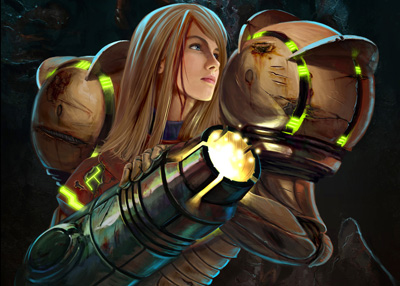
Samus Aran from Metroid

Samus Aran from Metroid by Ivan Flores

Conversation vs. Interaction

In film, the story is conveyed to a passive audience primarily through the dialogue of the cast. But in gaming, the game is defined by interactions that the player controls. Whether it is shooting, fighting, flying, walking or talking, different games draw on different actions, but it is the the player that performs these actions.

So in creating a test suitable for video games, I am less concerned about women talking to each other, but rather the actions performed to, with or by them. As it’s through these actions that we experience the game.

More...


30. October 2011 23:32

GameCity 6

Another amazing GameCity, we are in year six now and I’ve attended every year in some form or other. Each year the festival grows and develops in new and interesting ways and this year was no exception. There is no other event like this one, it offers a unique experience to explore and celebrate games, playing, art and their cultural significance. As such it draws a diverse audience from all over and it is these amazing people that really make GameCity the highlight of my year.

So here are some of my highlights and feelings about this year:

Journey and Robin Hunicke

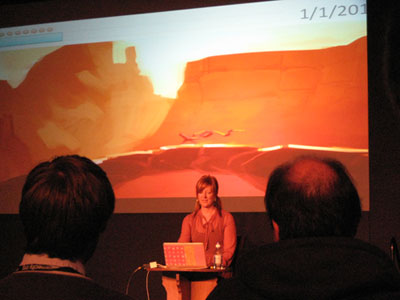
Robin Hunicke presents the development of Journey at GameCity

One of the most profound moments in GameCity history was when Robin played Flower in the arcade behind the Council House, then her talk on creative minds in the same year inspired this blog post. So I was elated to hear she was joining us again this year to play Journey, the latest game from That Game Company.

This year we had beanbags in preparation, with the addition of consoles set up around the tent to play along. Given the collaborative nature of Journey this seemed a great idea and was a natural progression from observer to participant.

Beforehand Robin spoke of the process of creating a game that allowed and encouraged co-operative play, and how to encourage the desired behaviour, instead of griefing and competitive play, so often found online. I always enjoy this insight into the design of the user experience in games. 

A special thanks to Robin for finding the time to talk to us afterwards and I hope GameCity will bring us all together again soon.

Uncharted Series, Richard Lemarchand and BAFTA

Richard Lemarchand presents Uncharted3 at GameCity

Over the course of GameCity Richard gave several talks on the Uncharted series, but the one that will stick with me the most was the BAFTA talk he gave, entitled Beauty and Risk which looked at emotions in gaming and how indie games had affected Uncharted. 

Any (games) talk that references Donald Norman’s ‘Design of Everyday Things’ get a huge thumbs up from me. 

Richard is a huge supporter of the indie game scene and both Robin and Richard are involved in Indiecade, which has I hope will return to GameCity. So as part of his talk he spoke about how the game The Graveyard had influenced the peaceful village in Uncharted 2, allowing the gamer to explore alternative contextual interactions.

The presentation was packed with information, including influences such as William Morris, best working practices and how systems in games are evolving, that are still rattling around in my brain.

More...


10. August 2011 08:57

User Interfaces in Games

Games UI Series

For some time I have written about both my professional and social interests on this blog; covering user experience and gaming, but I want to combine them and look at user interface design in games. I think this is an oft-neglected part of games, especially with the usual budget and time constraints, however as with any software design the usability of the user interface can have a profound effect on the user’s experience.

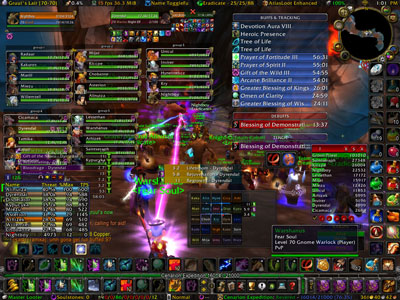
World of Warcraft screen with massive campaign detail

An advanced user experience on World of Warcraft

Usability in games is not restricted to on screen interactions, there is a such diversity of ways to interact with your gaming platform of choice; be it joypad, keyboard, touch screen, or no controller at all. This makes the platform and method of interaction a key part of the user experience in games, as such I will explore the strengths and weaknesses of these human-computer interfaces.

Some games designers and developers think that creating games is completely different to creating other software, because they are creating entertainment rather than tools. However recently as we have seen an increasing overlap between games and applications e.g. Epic Win we can see that these lines are far more blurred than previously considered. Software development has only recently realised the commercial value of user experience, but games developers often consider themselves the audience as well as the creators, failing to realise that their familiarity with their game hampers their ability to see their product impartially; perhaps more frustrated by the focus groups that require them to “dumb down” games than they are in the issues that may cause that confusion in the first place. While games do need to offer challenges in order to evoke a sense of achievement, these challenges should be designed and deliberate and not a hurdle of a poorly designed interface.

I was delighted to see that Edge has added to its staff Graham McAllister; the CEO of Vertical Slice, the UK’s first usability testing company to focus solely on games. This recognition of the need for usability in an industry leading publication can only help raise the profile of the value of understanding your users.

I’m hoping to write a series of game reviews, which look specifically at the UI and give a heuristic review on their strengths and weaknesses as well as offering possible alternative solutions where appropriate. 

RockStar’s Red Dead Redemption and LA Noire

I wanted to look at how RockStar have evolved their user interface from Read Dead Redemption to their latest game, LA Noire. Their games all have consistent game mechanisms, so it is possible to chart the evolution of their interfaces, even from GTA to their latest offering.

More...


19. June 2011 12:55

My fortnight affair with Nokia - a review of the N8

Nokia N8 handset

For the last two weeks, my HTC Desire has been off for repair, and Nokia very kindly sent me an N8 to try for two weeks, so I wasn’t stuck with the terrible handset T-Mobile gave me. The only condition.... this review.

So here it is the highs and lows of my first Nokia handset, from a user experience designer’s perspective.

I was impressed at first, the N8 offers some haptic feedback, which I think is very valuable when dealing with touchscreen interfaces, but in my opinion it’s too indiscriminate, as you get feedback for any action you perform, including scrolling. However the button feedback is very subtle and effective, with a down and up feedback, much better than other touch screen devices I’ve used.

More...


7. November 2010 16:45

GameCity 5

I have just about recovered from the annual whirlwind event that is GameCity. I’d like to cover the highlights of this year’s games culture festival.

Guardian Breakfasts

Keith Stuart from the Guardian kicked off each morning with a discussion around video games, looking at the new technology, the most important games so far, emotional impact of games and the possible future of gaming. Despite my sleep deprived state these were so good that I still managed to get into Nottingham city centre bright and early and a big thanks to Broadway cinema for putting on a slap up breakfast to help me get started for the day ahead. Unlike me Keith however was lucid and spoke intelligently about each subject, and had a changing panel of guests from speakers at the festival to give their two pence worth.

Limbo

Limbo screenshot

The eerie world of Limbo

Often in games that move me the audio will affect me, even if I’m often unaware of the impact that it is having as it adds to the game without distracting from the game-play. Limbo is just such a game, and Martin Stig Anderson did an amazing job of the audio for the game. His discussion and demonstration of the audio work for Limbo was really enlightening. He detailed how he had created the sounds, rerecording them through wire in order to distort them until the source was no longer decipherable. As Anderson spoke about how the transitions were handled in the platform game, in order to give areas of the game an identity and atmosphere, it really opened my mind to the complex possibilities of audio in games as the usually linear nature of music is turned on it’s head if placed in the context of a nonlinear game where the user controls the journey both in time and space. In Limbo Anderson used the environment of the game to create the soundtrack, rather than overlaying the game with a piece of music.

He also spoke about how audio offers us the most “temporal nuances” compared to our other senses, which tied Jonathan Blow’s earlier talk in the day about Braid and learning the rhythm of platform games, such as Super Meat Boy in order to be able to play them. We can learn to play some games by ear.

James Hannigan

Photo of St Mary's church with choir for GameCity

Photo of the James Hannigan event at GameCity kindly permitted by zo-ii

This event was astounding and a fine example of what GameCity do amazingly well and you experience no where else; the convergence of cultures in a way that is both theatrical and emotive. Last year we saw Robin Hunicke perform Flower in a shopping centre complete with falling petals. This year we had Pinewood Choir in St Mary’s, the oldest church in Nottingham, performing soundtracks from games such as and Command and Conquer: Red Alert 3, Warhammer and Harry Potter the Deathly Hallows, complete with live owls. There is something profound about hearing an talented choir perform in the reverberating acoustics of an old gothic church, but when the music they are singing takes to back to a moment in a game they combine in a way that gives a sense of grandeur to an often underrated part of the gaming experience.

More...


8. October 2010 11:37

Yulia Brodskaya - Papergraphic

Yulia Brodskaya has rejuvinated the old craft of quilling and added her own style and flair. I'm not aware of anywhere to buy her work yet unless you are lucky enough to pick up one of the multiple publications who have commissioned her work.

However you can get a gorgeous theme for Google Chrome or a T-shirt with her work on.

The beauty of these images comes not only from the fantastic work she creates, but the very skilled way in which they are photographed with diffused light. I'd love to learn more about her creative process and the logistics of the creation and photography. There has been a real resurgence of papercraft graphic art recently including some amazing work from Su Blackwell.


Categories:

Tags:

16. May 2010 13:41

Android and HTC: The mobile power couple

I recently acquired a HTC Desire running Android 2.1 and it has significantly changed the way I use my mobile phone. The primary reason for this can easily be attributed to Android. I knew when selecting a new phone that the apps would make or break it.

So why not go with iPhone? Because HTC make the best hardware on the market.

HTC Desire

More...


3. April 2010 12:47

Games Based Learning: Alice Taylor

Alice Taylor, Commissioning Editor for Channel 4 (and Wonderland blog) talked recently at Game Based Learning, looking at how gaming enables Channel 4 to engage with their target audience of 14 to 19 year old. But also looks at how gaming mechanisms can be used to engage large numbers with an educational agenda.

Video of Alice Taylor

To see the full selection of videos go the the Games Based Learning forum. I'd also recommend Matt Mason's talk on pirating and how it adds value to the original, touching on how game modding evolved.


24. March 2010 09:24

Ada Lovelace Day: Robin Hunicke

This year I was really sad to see that the Women in Gaming conference has been cancelled due to low delegate numbers. I am an avid gamer and I think the games industry is sometimes behind other areas of technology, where it could really benefit from getting more women involved in games development. Often women go for the human focused areas of development, such as user experience or copyright, which are often sadly overlooked in games development. Instead there are a steady stream of churned out games like Imagine Babies and its ilk, lacking original gameplay and creativity. While I am glad that the games industry is finally realising gamers are girls and women too and I value a diverse set of games to choose from, I don't think it all needs to be Barbie dolls and toy soldiers in electronic form. Obviously this isn't just due to a lack of women, but by cultural stereotypes and an industry that has increasingly large budgets and monolithic development houses. Independant games development however still have a wealth of opportunity.

There are however some amazing women involved in games development, one of whom is Robin Hunicke who is a games designer and producer. While at EA she worked on My Sims and Boom Blocks and their sequels before recently moving to ThatGameCompany, who developed the truly awesome Flower. She combines this with academic study on Artificial Intelligence and Video Games, building bridges between the theory and the application. Her research on dynamic difficulty examines different techniques for representing and reasoning about uncertainty, to see how these approaches can be extended and combined to create flexible interactive experiences that adjust on the fly.

Robin Huckine and her cat Mika

I was lucky enough to see Robin talk at Gamecity last year and she spoke about how in order to be a better game designer you need to do much more than play games that you need to look outwards and experience as much of life a possible, reading and travelling. I think this is great advice no matter what your role, especially where you want to explore creativity. She also spoke passionately about using sketchbooks to capture ideas, to allow you to externalise ideas, and as creative people to capture ideas and work through some concepts, something which has definitely been true in my experience.

More...